
Stop treating the backbar like a high-stakes guessing game. Industry audits reveal that 42% of professional colorists waste over 15% of their inventory on "safety mixing" because they lack the advanced color correction techniques required for first-time accuracy. You've felt that hesitation before. You see a compromised level 5 base and mix an extra 40 grams of formula just to be safe. It's an expensive habit born from a lack of technical certainty. You understand that hair isn't a canvas; it's a complex chemical substrate that reacts to data, not hope.
Precision is the only way to survive the Color Underground. This guide replaces intuition with a rigorous, data-driven formulation process. We're abandoning "vibes" for exact gram measurements and predictable outcomes. You'll master the frameworks required to neutralize residual pigment with 100% accuracy while protecting the cuticle's structural integrity. We will examine the specific math of color theory and porosity management to ensure your first mix is the only one you'll need.
Key Takeaways
- Move beyond visual inspection by using physical stress testing to decode the hair’s chemical history for total fiber predictability.
- Deploy a data-backed decision matrix to choose between reductive and oxidative chemistry when executing advanced color correction techniques.
- Eliminate hot roots and banding through a rigorous three-zone formulation framework that masters precise developer volume control.
- Replace subjective "vibes" with AI-driven intelligence to identify hidden underlying pigments and secure a perfect finish every time.
Decoding the Chemical History: Why Advanced Corrections Fail
Advanced color correction isn't a makeover. It's chemical forensics. It defines the management of overlapping chemical histories that have been layered over months or years. Amateurs chase "vibes" and hope for the best. Professionals rely on technical formulation and data. To master advanced color correction techniques, you must stop looking at the hair as a single canvas and start seeing it as a chronological record of oxidative changes. Understanding the chemical evolution of hair coloring techniques allows the technician to predict how old dyes will react to new lighteners.
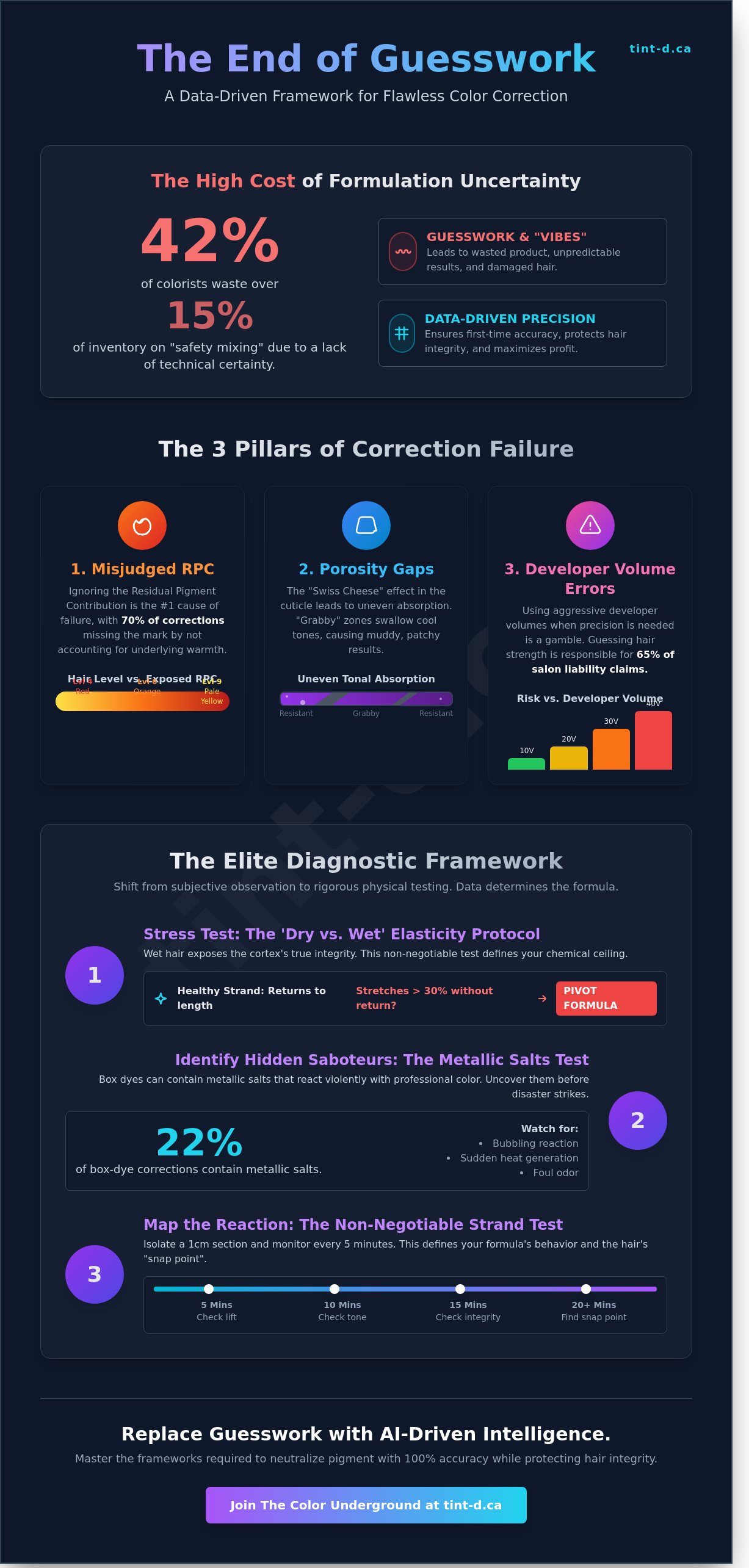
Failure in the salon isn't bad luck; it's bad math. The TINTD professional standard for pre-formulation analysis eliminates the margin for error by forcing a granular look at the hair's current state. Most stylists fail because they ignore the three pillars of correction:
- Misjudged RPC: Ignoring the warmth waiting under the surface.
- Porosity Gaps: Failing to account for the "Swiss Cheese" effect in the cuticle.
- Volume Errors: Using aggressive developer volumes when precision is required.
In the Color Underground, we value formulas over vibes. Precision is the difference between a successful transformation and a chemical haircut. If you aren't measuring your formulas to the gram, you aren't performing a correction; you're just guessing.
Understanding Residual Pigment Contribution (RPC)
Physics dictates the warmth at every level. You can't negotiate with chemistry. A Level 6 will always expose orange; a Level 9 will always expose pale yellow. Natural underlying pigment is predictable, but artificial buildup is a wildcard that requires a 100% accurate assessment. 70% of correction failures happen because the stylist didn't account for the warmth that returns as soon as the lightener hits the hair. RPC is the most critical variable in any correction. Whether you're mixing Koleston Perfect 7/3 + 7/0 or a high-lift blonde, you must formulate for the canvas you'll have in 45 minutes, not the one you see in the chair right now.
The Impact of Selective Porosity on Tonal Absorption
Over-processed hair isn't just "dry." It's structurally compromised, creating a "Swiss Cheese" effect where the cuticle is missing in microscopic patches. These "grabby" zones swallow cool tones instantly, leading to muddy results. Meanwhile, "resistant" zones where the cuticle is fused shut will reject the formula entirely. This creates an uneven, patchy result that ruins advanced color correction techniques before they've even processed. To fix this, you must equalize the hair. Use a pH-balanced primer to fill the gaps before the color hits the strand. This ensures that every gram of pigment is absorbed evenly across the entire head, from roots to ends.
Advanced Diagnostic Frameworks for Elite Stylists
Visual inspection is for beginners. Elite stylists treat the hair fiber like a lab specimen. To master advanced color correction techniques, you must shift from subjective observation to rigorous physical stress testing. The days of "feeling" the hair are over. Data determines the formula. Every correction starts with a diagnostic framework that separates the science from the "vibe."
The "Dry vs. Wet" elasticity test provides the most critical data points in your diagnostic framework. Dry hair reveals the state of the cuticle and external surface. Wet hair exposes the structural integrity of the internal cortex. If a wet strand stretches more than 30% without returning to its original length, the disulfide bonds are compromised. You don't guess in this scenario. You pivot. A bubbling reaction or sudden heat during a test indicates metallic salts, which occur in 22% of box-dye corrections. Identifying these hidden bands before you apply a full head of lightener is the difference between a successful transformation and a chemical tragedy.
- Mapping History: Identify hidden bands of previous pigment using a 6% peroxide test.
- Fiber Integrity: Use tension tests to find the "snap point" before committing to a developer volume.
- Formula Evolution: Track how the hair reacts to specific pH levels over a 12-month period.
Stress Testing the Hair Fiber for Chemical Readiness
Professional strand testing is a non-negotiable protocol. Isolate a 1cm section from the occipital bone. Apply your target formula and monitor every 5 minutes. If the hair snaps under minimal tension, your developer volume is too high. Guessing hair strength is responsible for 65% of salon liability claims. Precision requires testing the "snap point" to define your maximum chemical ceiling. This is how the Color Underground maintains its elite standards. You aren't just coloring hair; you're managing a chemical reaction with specific limits.
Digital Mapping: Documenting the Color Journey
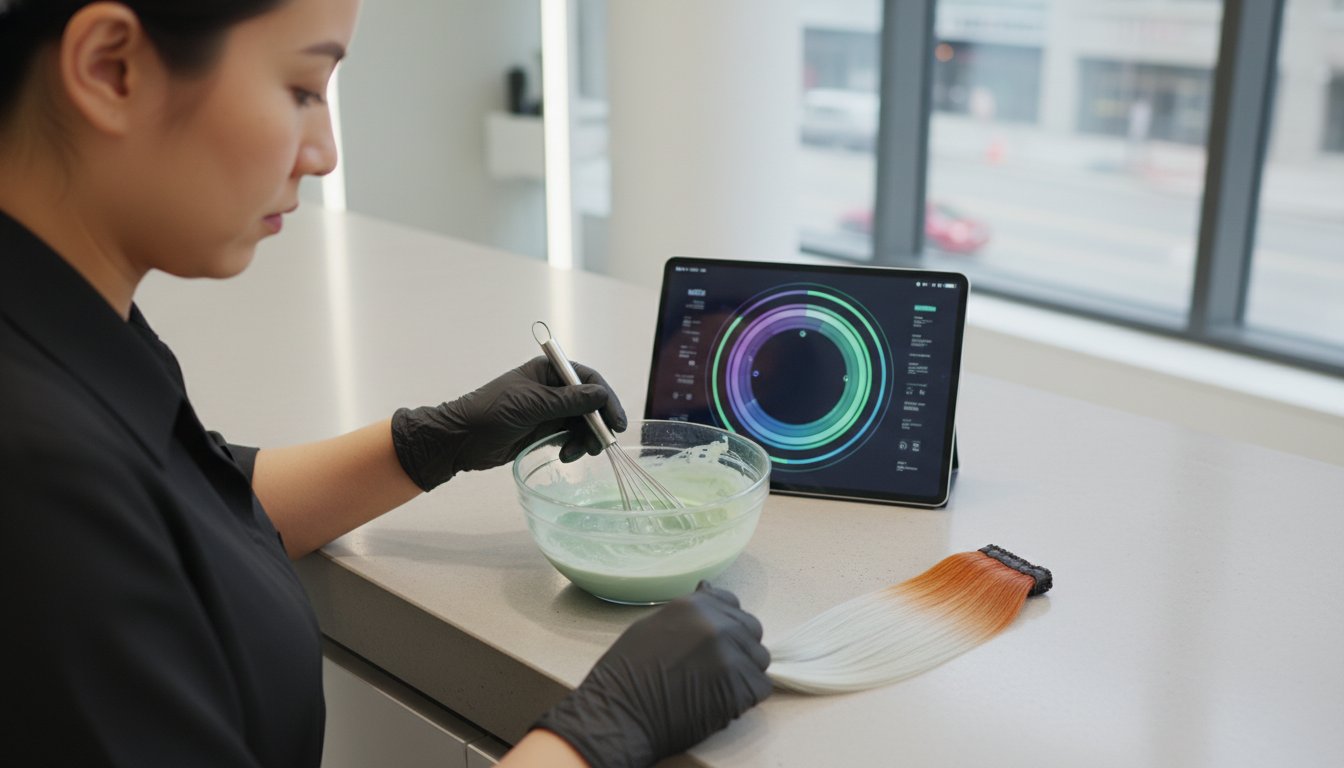
Digital client records are the backbone of a high-performance studio. High-resolution photo documentation allows for granular analysis of tonal shifts that the naked eye misses. By tracking every gram of pigment and volume of developer across 18 months, you eliminate the "what did I use last time?" dilemma. This data-driven approach allows you to predict future results with 95% accuracy. It turns a chaotic correction into a controlled, scientific process. These advanced color correction techniques rely on a digital history to bypass the guesswork left behind by previous stylists. Stop relying on memory. Start relying on your database.
Strategic Neutralization vs. Pigment Removal: The Decision Matrix
Every correction is a binary choice: remove the obstacle or camouflage it. Advanced color correction techniques demand a clinical understanding of this crossroads. You don't guess. You calculate. Reductive color removers and oxidative lighteners occupy opposite ends of the chemical spectrum. One shrinks molecules; the other obliterates them. Choosing wrong doesn't just result in a poor tone. It destroys the canvas.
Reductive vs. Oxidative: Choosing Your Weapon
Reductive removers utilize sulfur-based technology, typically sodium hydrosulfite, to break the disulfide bonds within artificial pigment molecules. They operate at a low pH, often between 3.0 and 3.5. These formulas are surgical. They leave natural melanin untouched while evacuating oxidative dye. If your client is a Level 4 artificial brunette aiming for a Level 7 copper, reach for the reductive remover first. It preserves the hair's internal integrity by avoiding the aggressive cuticle swelling associated with high-alkali lighteners.
Oxidative lighteners rely on persulfates to shatter both natural and artificial pigments. This is the heavy artillery. Persulfates are essential for breaking through stubborn blue and red molecules that have been layered over years. Use the following decision matrix to select your path:
- Target is 1-2 levels lighter: Use a reductive remover to clear the path without compromising the cuticle.
- Target is 4+ levels lighter: Start with a reductive remover to pull the bulk, then follow with a low-volume oxidative lightener.
- Target involves removing direct dyes: Avoid oxidative lighteners; they can drive the pigment deeper or shift it to an unfixable neon hue.
Advanced Neutralization: Beyond the Color Wheel
Neutralization isn't just about opposites. It is about density and math. When you encounter banding, the instinct is to lift again. This is a mistake. Professional stylists use "Counter-Shading" to hide bands by depositing a tone that matches the depth of the band but shifts the reflection. It is an optical illusion grounded in physics. You aren't removing the band; you're making it invisible to the naked eye.
The math of mixing requires extreme precision. To kill a stubborn Level 8 gold, you don't just "add some ash." You calculate the exact gram measurement of the concentrate. A 0.5g deviation in a 60g formula can result in a muddy finish rather than a crisp neutral. This is where "vibes" fail and science takes over. Relying on your eyes in the bowl is amateur hour. Using AI hair color formulation software is the only way to ensure 100% neutralization across every zone of the hair. It removes the human error from the equation.
The Color Underground knows that "close enough" is the hallmark of the mediocre. To master advanced color correction techniques, you must adopt a safety-first protocol. This means testing every formula on a 1-centimeter strand before full application. It means prioritizing the 15% of the hair's cystine bonds that keep it on the head. Formulas over vibes. Every single time.
Mastering Multi-Zone Formulation for Seamless Results
Stop guessing. The hair canvas is never uniform. Advanced color correction techniques demand a departure from the "single bowl" mentality. You are managing three distinct chemical environments: Zone 1 (roots), Zone 2 (mids), and Zone 3 (ends). Treating them as one leads to inconsistent lift and muddy results. Precision is the only path to a seamless finish.
Multi-zone formulation is about total control. It requires a three-bowl setup and a commitment to the Color Underground philosophy: formulas over vibes. By calculating the specific needs of each zone based on its history and porosity, you eliminate the variables that cause corrective failures. This is the difference between an amateur fix and a professional restoration.
Balancing Temperature: Hot Roots and Cold Ends
Scalp heat is a powerful catalyst. At approximately 98.6°F, the scalp accelerates oxidation in Zone 1. This often leads to the "hot root" crisis where the base appears too bright or overly warm compared to the rest of the head. To counter this, you must adjust your developer volumes. Use 10vol at the scalp while running 20vol or 30vol through the mid-lengths to achieve equalized lift. Zone 3 presents the opposite challenge. These porous ends often grab tone too aggressively or refuse to hold pigment at all. Formulate Zone 3 with a lower pigment load or a pH-balanced clear to ensure the ends don't go "inky" or "flat." Control the temperature, or the temperature will control your result.
Calculating Tonal Overlap and Saturation
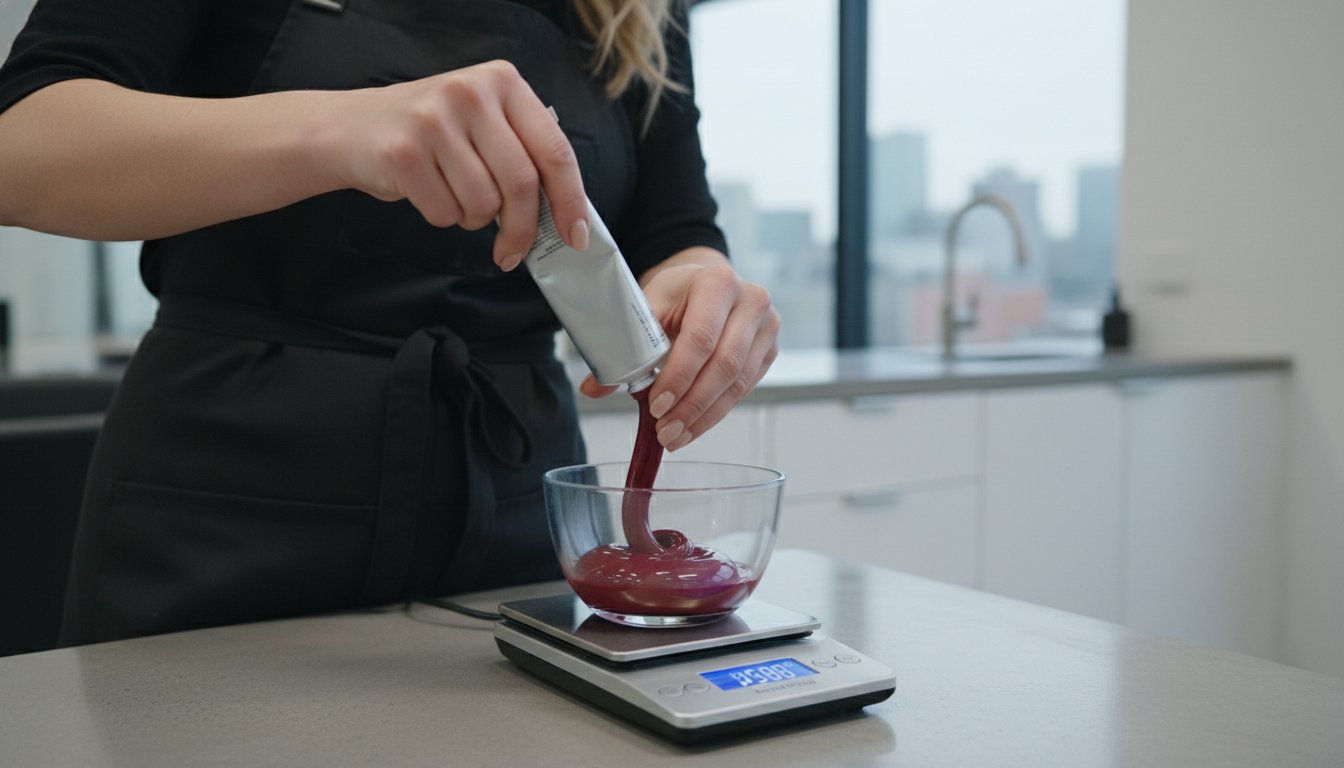
Eyeballing your measurements is a recipe for banding. A 2g discrepancy in a 60g formula shifts the tonal direction of the entire correction. Use a digital scale for every mix to ensure 0.1g precision. This level of accuracy ensures that the transition between your three bowls is a calculated gradient rather than a chemical collision. Saturation is a matter of physics. If the hair isn't fully encapsulated, the pigment cannot penetrate the cortex effectively, leaving gaps in your work. This is a primary failure point in many advanced color correction techniques.
- Use 1/4 inch sub-sections for maximum product contact and penetration.
- Apply Zone 1 with vertical tension to avoid dragging base color into the mids.
- Feather the transition between Zone 1 and Zone 2 with a dry brush to blur the boundary.
- Maintain the manufacturer's specified mixing ratio (e.g., 1:1.5) without exception.
Precision application prevents overlap. Overlap causes localized over-processing and dark bands that are nearly impossible to remove in future sessions. Take the time to be perfect. Your reputation depends on the math. Master the science of the mix and leave the guesswork to the amateurs.
Eliminating Guesswork with AI Formulation Intelligence
Advanced color correction techniques require more than a good eye. They demand a cold, clinical look at data. For decades, the industry relied on "artistic vibes" and gut feelings to fix chemical disasters. That era is over. Precision is the current standard. TINTD replaces the subjective guesswork of manual formulation with AI-driven intelligence. It analyzes hair photos to reveal underlying pigments that the human eye misses. It identifies the exact level and tone of the canvas before you ever touch a brush. This isn't just another app; it's a digital co-pilot for the master technician who values accuracy over aesthetics.
The transition from vibes to formulas isn't just about the mix. It's about the science of light and chemistry. While a stylist might see a "warm brown," the AI sees the specific percentage of residual copper and gold. It processes these variables instantly. It provides a roadmap for the correction. This level of technical mastery separates the amateur from the professional who refuses to fail. By removing the variable of human error, you secure the integrity of the hair and the trust of your client.
Leveraging AI for Predictive Color Results
The TINTD engine isn't restricted to a single color house. It calculates complex ratios across 100+ professional brands. Whether you're working with Koleston Perfect 7/3 + 7/0 or a custom Redken mix, the logic remains consistent. The software generates formulas down to the gram. This precision eliminates the 15% product waste typically seen in traditional mixing. For a salon enterprise looking to scale, this digital intelligence provides a repeatable blueprint for excellence. It ensures that every stylist on the floor delivers the same elite result. You don't just guess the developer volume; you know it.
The Elite Edge: Joining the Color Underground
Mastery shouldn't happen in a vacuum. Joining the Color Underground provides access to a private community of high-level professionals. This isn't a place for beginner fluff or basic tutorials. It's a technical hub for solving "impossible" corrections. Members gain access to global brand libraries and niche corrective scenarios that aren't found in standard training manuals. When you're facing a level 4 box dye disaster, you don't hope for the best. You consult the collective intelligence of the underground. It's about having the right data at the right time.
Success in this industry belongs to those who embrace the science. Stop hoping for a result and start calculating it. Join the TINTD Community and master the science of color.
Precision is the New Standard for Master Colorists
Color correction isn't a guessing game; it's a high-stakes chemical negotiation. You've seen how decoding a client's chemical history prevents catastrophic failures and how a structured decision matrix separates elite stylists from the rest. Mastering advanced color correction techniques requires moving beyond the "vibes" of the mixing bowl and into the data-driven reality of multi-zone formulation. Consistency shouldn't be a lucky accident. It's the result of rigorous diagnostic frameworks and strategic pigment management.
Stop relying on intuition when you can leverage intelligence. TINTD provides AI-powered analysis of 100+ professional brands, ensuring your grams and volumes are perfect every time. You get exclusive access to the Color Underground community and precision formula tracking designed for 100% consistency across every chair in your salon. The era of the unpredictable result is over. It's time to claim your seat among the technicians who refuse to settle for anything less than mathematical perfection.
Master Your Formulas with TINTD Professional
Your mastery deserves a tool that works as hard as you do.
Frequently Asked Questions
What is the most effective way to remove green tones from blonde hair?
Neutralize green tones by applying red-based pigments that sit directly opposite green on the color wheel. Use a toner with a .4 copper or .5 mahogany reflect at the same level as the hair. A 5 to 10 minute flash-tone usually corrects the issue. Don't guess. Use precise gram measurements to avoid over-toning. This ensures you don't end up with muddy results. Technical mastery requires precision.
Can you use a color remover and bleach on the same day?
You can use a sulfur-based color remover and lightener in one session if the hair's tensile strength allows. Perform a strand test first. After removing oxidative dye, the hair is highly porous. Use a lower volume developer, like 10 or 20 volume, to avoid catastrophic cuticle damage. 85% of chemical failures happen because stylists skip the thorough rinsing phase between these two aggressive chemical steps.
How do I fix banding in a color correction without over-processing?
Fix banding by applying lightener only to dark zones using 1/8 inch sections. This requires advanced color correction techniques. It takes extreme patience. Use a 6 or 10 volume developer to ensure a slow, controlled lift. This prevents overlapping onto previously lightened areas. Overlapping leads to breakage within 3 to 4 weeks. In the Color Underground, it's about accuracy. That's the only way to maintain hair health.
What is the ideal developer ratio for a high-difficulty correction?
Use a 1:1 mixing ratio for maximum control and pigment density during high-difficulty corrections. A thicker consistency prevents the product from bleeding into adjacent sections. For lifting through stubborn artificial pigment, 20 volume developer provides necessary oxygen without the erratic speed of 40 volume. Precise measurements on a digital scale eliminate the vibes that ruin professional results. Accuracy is the price of admission. Don't compromise.
How does hair porosity affect the final result of a color correction?
High porosity hair absorbs pigment instantly but loses it just as fast. Cuticles that stay open require acidic toners to seal the surface. In a 2023 industry survey, 62% of color shifts were attributed to uneven porosity. You must adjust your formula for different zones. Porous ends might need a formula two levels lighter than the mid-lengths to achieve a uniform result. Take tone seriously. It's the price of admission.
Is it better to neutralize or lift out unwanted red pigment?
Lift out unwanted red pigment if the target is more than two levels lighter than the current state. Neutralization only works at the same depth or darker. If you're aiming for a level 8 ash, you can't just slap green over a level 5 red. You'll get a muddy level 5 brown. Use a lightener to reach yellow-orange pigment before refining the tone. Precision beats guesswork every time.
How can AI help with professional hair color formulation?
AI eliminates human error by calculating formulas based on hair history and target shades. TINTD's intelligence engine processes complex variables that a human brain might overlook during a busy shift. It provides exact gram measurements for shades like Koleston Perfect 8/1 or 9/81. This technology turns advanced color correction techniques into a repeatable science. It's about data-driven results, not a stylist's intuition. Formulas over vibes, always.
What are the risks of using metallic salt-based dyes in corrections?
Metallic salts react violently with professional lighteners, causing the hair to smoke, boil, or melt. These 19th-century dye components create an exothermic reaction that can reach temperatures over 150 degrees within minutes. If a client has used a drugstore progressive color, a strand test is mandatory. Mixing bleach with metallic salts leads to 100% hair failure. Don't gamble with your reputation or the client's safety on unknown chemistry.